OmniNexus Team
Turn a Developer Sales Kit Into Posts Buyers Read
Pull the buyer questions out of a new launch sales kit, turn each one into its own post, and stand out when dozens of agents push the same project.
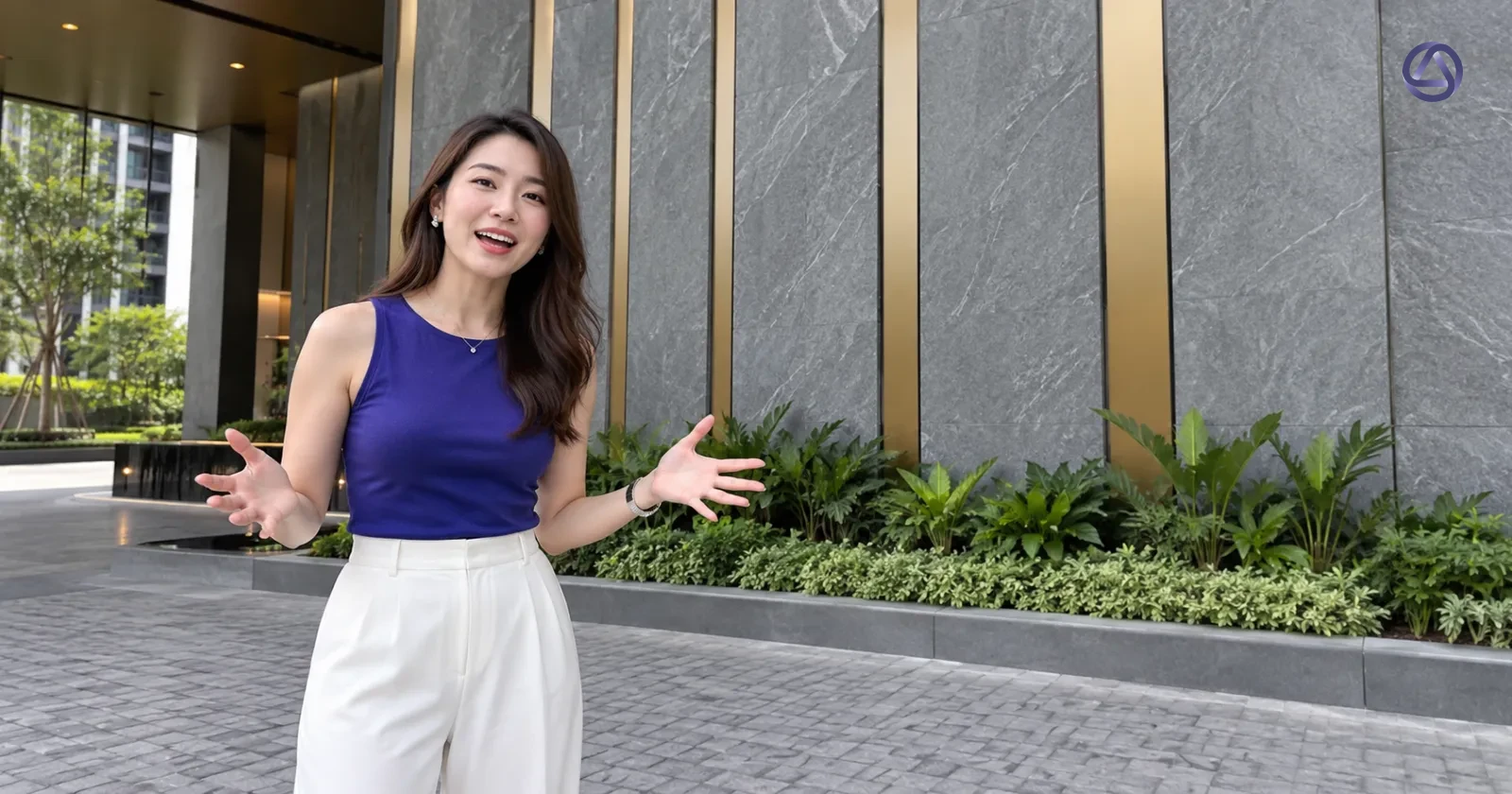
The developer sends the sales kit on Monday. By Wednesday, forty agents have posted the same render, the same "strategic location" line and the same starting price. A buyer scrolling Facebook sees the project five times in a row and cannot tell which agent to message.
The kit holds more than enough material for a month of posts. Most agents paste its headlines instead of answering the questions a buyer actually has.
A worked example on an invented project
To keep this concrete, we will use a hypothetical project: a 30-storey residential tower in Cheras, Kuala Lumpur, called Residensi Contoh. Every number below is made up to show the method.
Imagine the kit says: two towers, 30 storeys each, 3 layouts, facilities on level 8, a link bridge to a nearby MRT station, Phase 1 sold out, Phase 2 open for booking.
That is five lines of brochure. Each one hides several buyer questions.
Step 1: Read the kit the way a buyer would
Open the PDF with a pen and write down every question a real buyer has asked you before. Use what your clients ask on the phone, not what the developer wants to say. Sort them into four piles.
- Layouts. Which unit is right for a couple, a young family, an investor? Where is the kitchen window? Is the balcony usable or decorative?
- Facilities. What is on level 8? Is the pool for residents only? How many lifts serve each tower?
- Location. How far is the walk to the station, and is the path sheltered? What is the drive to the nearest school at 7.30am? Where do residents actually buy groceries?
- Phase and booking. What is open now? What does booking involve? What happens after the booking fee? Who do I speak to?
Skip anything you cannot answer honestly. If the kit says "near the city centre" and you do not know the real drive time, go and drive it.
Step 2: One question, one post
A buyer who has one question will stop for a post that answers it. They will scroll past one that tries to answer ten. So each question becomes its own post.
Here is a list pulled from the invented kit above.
- The 2-bedroom layout, room by room, with one thing you would change.
- The 3-bedroom layout for a family for a family that needs a helper's room.
- What level 8 looks like on a normal Saturday.
- The walk from the tower lobby to the station, timed.
- Schools and clinics within a short drive.
- What "Phase 2 now open" means for a buyer who missed Phase 1.
- A booking checklist: documents to bring, what to ask the developer's sales gallery.
- Who this project suits, and who should look elsewhere.
- A comparison of two layouts, side by side.
- A "questions I was asked this week" post, answered in three lines each.
That is ten posts from one PDF, and none of them repeats what the other forty agents posted.
Sample captions
These are written for the hypothetical project. Change the details to match your own.
Layouts
Residensi Contoh, 2-bedroom unit (hypothetical example). The living room opens to the balcony, which is wide enough for a small table. The second bedroom fits a single bed and a desk, but not a queen. If you work from home, this works. If you are planning a baby, ask me about the 3-bedroom instead.
Location
I timed it: lobby to the MRT station is 9 minutes on foot, and the last stretch is covered. In the rain, the link bridge keeps you dry for most of it, but the stretch from the lobby to the bridge is open. Worth knowing before you decide how many cars you need.
Phase and booking
Phase 2 is now open for booking, from RM480,000 (invented figure, for illustration). Missed Phase 1? Here is what changes: unit mix, floor range and the booking steps. Message me and I will send the checklist before you visit the gallery.
Notice what these have in common. Each one answers a single question. Each one has a detail that only someone who read the kit carefully would include, and a line that only you could write.
Step 3: Add what the kit cannot give you
The developer wrote the kit for everyone. Your edge is everything in it that is not in the kit. Three sources are worth using.
Your viewing notes. After a gallery visit or show unit tour, write down five things: what the sales person did not mention, what the show unit hides, how long the queue was, what you would ask differently, and what surprised you. A post that says "the show unit uses a lighter floor than the kit's render shows" earns more trust than ten renders.
The area you know. If you live or farm in Cheras, you know which road jams at 6pm and which kopitiam opens early. In Business Bay or Dubai Hills, it is the road that backs up at rush hour and the cafe that opens before the school run. That is local content the kit will never carry, and the other agents will not have it either.
The buyer you would recommend it to. Be willing to say who should not buy. "This suits first-time buyers who want a short walk to the station. It does not suit anyone who wants a large balcony." Buyers remember the agent who ruled out a bad fit, because it shows you are matching buyers to units.
Standing out when everyone has the same project
A short checklist before you post anything from a kit:
- Does this post answer one question a buyer has asked me?
- Is there at least one detail that is mine, not the developer's?
- Would a buyer who has seen five other posts on this project learn something new?
- Have I checked every figure against the latest kit? Prices, availability and phase details change, and a wrong number costs you credibility.
- Is the caption written for the buyer who will read it, in the language they read in?
On that last point: Chinese-speaking and Malay-speaking buyers often read a project post in their own language. A translated version of an English caption is a start. A caption adapted to what that buyer cares about is better: lead each version with the question those buyers ask you most, which may not be the one your English caption leads with.
A simple posting plan
Do not post all ten at once. Spread them across a few weeks so each one gets its own moment, like this.
| Week | Posts |
|---|---|
| One | The two layout posts, the side-by-side comparison and the station walk |
| Two | Facilities, schools and clinics |
| Three | The Phase 2 explainer and the booking checklist |
| Four | The "who this suits" post and a "questions this week" roundup |
Keep one slot open each week for something fresh, like a viewing note or a local update.
Where Marvis fits
If you would rather not work through the PDF by hand, Marvis can take a sales kit PDF as a source and turn it into captioned posts, which you then edit and approve. We cover the steps in a tutorial video from May 2025. It can write captions in any language, and the content calendar lets you lay the posts out over 30 days so the project does not flood your feed in one week.
The tool gives you a first draft. The viewing notes, the area knowledge and the honest advice about who should buy are still yours to add, and they are what makes the post different from the other forty.
Your next step
The method works for a tower in Business Bay or on Al Reem Island too.
Open the latest sales kit you have, and write down ten questions a buyer has asked you about it. Pick the three you can answer best from your own experience, and write those posts this week. If you want help with the rest, you can try Marvis.