OmniNexus Team
Adapting One Ad for Instagram, Facebook, TikTok and LinkedIn
One ad idea, four platforms. See what to change (ratio, hook, tone, call to action) and what to keep, with a cold brew example from Petaling Jaya.
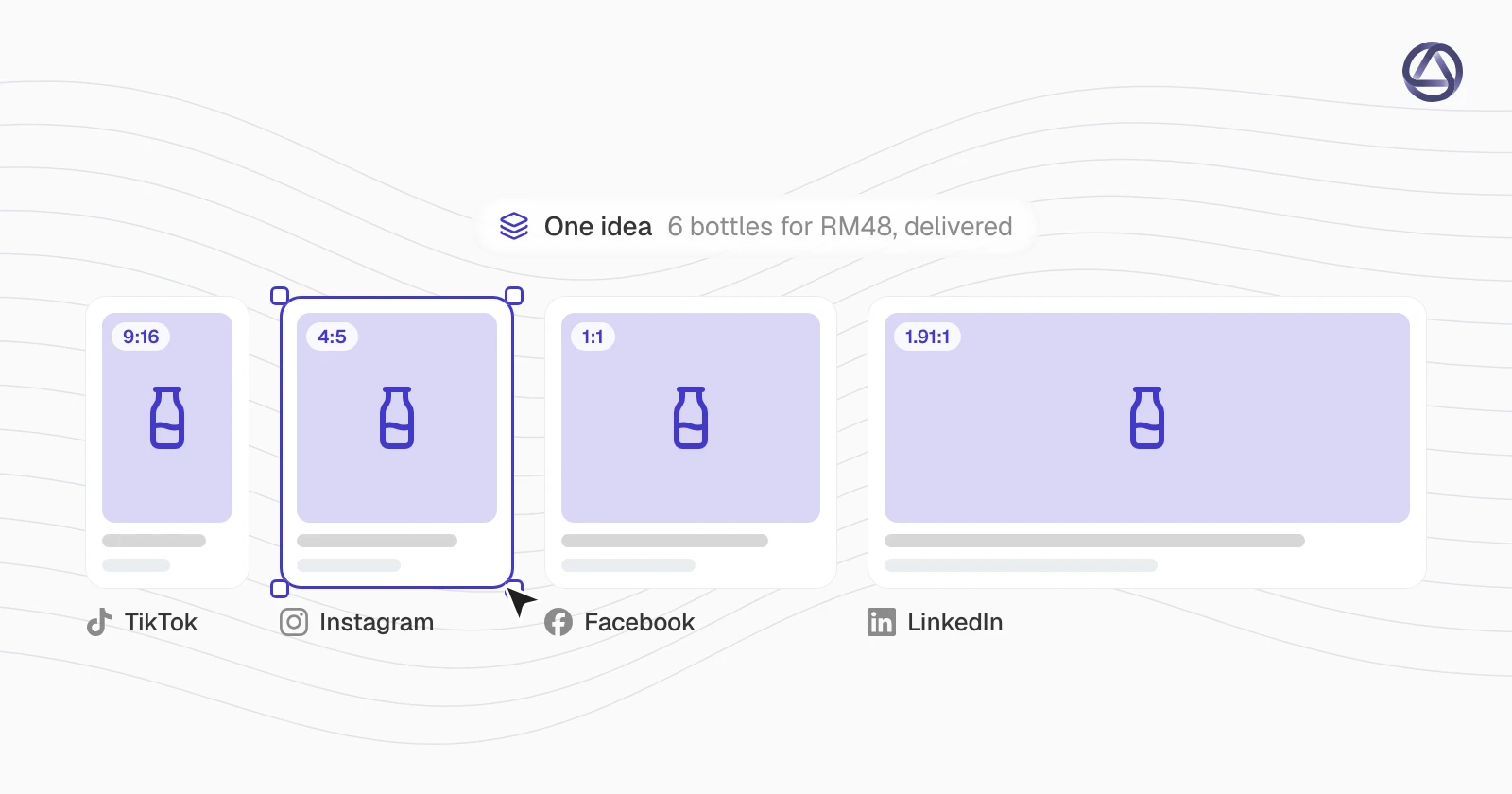
You have one good ad idea and one product photo. You post it everywhere, and it works on one platform and falls flat on the other three. The idea was fine. The ad was dressed for the wrong room.
Adapting an ad does not mean starting again. It means deciding which parts must stay fixed and which parts should bend to the platform. Below is a worked example, followed by a short checklist you can reuse.
The example: a cold brew brand in Petaling Jaya
Say you run Senja Cold Brew, an invented brand that sells bottled cold brew coffee from a small roastery in Petaling Jaya. The concept for the month: a box of six bottles for RM48, delivered in the Klang Valley, with the line "Slow-steeped for 18 hours, ready when you are."
That concept has three parts that never change:
- The offer. Six bottles, RM48, delivery in the Klang Valley.
- The brand. The name, the logo, the colours, the way the bottle looks and the way you talk.
- The proof. The 18-hour steep, the roasting in Petaling Jaya, the photo of the actual bottle.
If a customer sees your ad on two platforms in the same week, these three should match. A different price on LinkedIn than on Instagram is a trust problem, not a creative choice.
Everything else is open to change.
What changes from platform to platform
Aspect ratio
The common ratios are 1:1 (square), 4:5 (tall portrait), 9:16 (full-screen vertical) and 1.91:1 (wide). Which one fits depends on where the ad sits and how much of the screen it gets.
- 9:16: full-screen vertical suits short video on TikTok and also works for stories and reels on Instagram and Facebook.
- 4:5: takes more of the phone screen than a square in an Instagram or Facebook feed, so the bottle can be bigger.
- 1:1: a safe middle that crops cleanly almost anywhere.
- 1.91:1: a wide format that suits link ads on Facebook and LinkedIn.
Reframe the image for each shape instead of stretching or cropping it. A 9:16 version of the bottle needs the subject and the text kept away from the top and bottom edges, where the app places its own buttons and captions. Check each platform's current ad specs before you export.
The hook
The hook is the first line or the first second. It has to earn the next one, and what earns attention differs by place.
- TikTok: open on motion. Ice hitting a glass, a hand pouring, a text line on screen: "RM48 for six bottles?" The viewer has not chosen to watch an ad, so the first second does the persuading.
- Instagram: lead with the picture. A clean bottle on a kopitiam table, in your brand colours, with a short line on top.
- Facebook: lead with the practical point. "Cold brew delivered to your door in the Klang Valley." People here often read a little more and want to know what they are being offered.
- LinkedIn: lead with a situation that fits working life. "The 3pm slump needs a better fix than another meeting."
Tone and caption length
Same brand, different register. Think of it as one person at four different events.
| Platform | Tone | Caption |
|---|---|---|
| TikTok | Playful, quick, a bit cheeky. Humorous or Bold fits | Very little text, the video does the work |
| Warm, tidy, visual. Persuasive without shouting | Short, supporting the image | |
| Friendly and plain, like explaining to a neighbour | Longer and more explanatory is fine | |
| Composed and useful, with fewer jokes | A few short paragraphs, if relevant |
Write to the mood, not to a count, and cut anything that repeats the visual.
The call to action
The offer stays the same, but the ask can change to match how much effort the person is willing to give at that moment.
- TikTok: "Tap to get your box." Low effort, one step.
- Instagram: "Order your box, link in the profile."
- Facebook: "Order online, delivery across the Klang Valley." A little more detail, since the reader wants to check before clicking.
- LinkedIn: "Order a box for your team." The same product, framed for an office.
Who is scrolling, and in what mood
Be careful with generalisations. They are starting points to test against your own audience, not rules.
- TikTok: often entertainment mode, flicking through short clips, so the ad has to feel like it belongs in the stream.
- Instagram: often browsing mode. People look at pictures, save ideas and follow brands they like.
- Facebook: a place where people catch up on friends, family, groups and local news, so a local delivery message can feel natural.
- LinkedIn: usually work mode. People are thinking about their job, their company and their colleagues.
That is why the same bottle becomes a snack-sized video on one platform and a team order on another. The product did not change. The person looking at it did.
Language is another lever. Say your Facebook audience reads more Malay and your LinkedIn audience reads English. Writing the Facebook version in Bahasa Malaysia is an adaptation too, and often a bigger one than the ratio.
The same idea in a different industry
The pattern holds outside coffee. Say you sell a vitamin C serum from Dubai. The offer (one bottle, AED 90), the brand and the proof (a skin patch routine, ingredient list, your own before and after photos shared with permission) stay fixed. TikTok gets a 15-second routine clip. Instagram gets a clean flat-lay in 4:5. Facebook gets a plain caption, in English or Arabic, explaining who the serum suits. LinkedIn is probably the least natural home for it, which is a useful answer in itself: not every product needs all four platforms.
A checklist for adapting any ad
- Write down the offer, the brand and the proof. These are locked.
- Pick the ratio for each placement and reframe the image for it.
- Write a different first line or first second for each platform.
- Set the tone for the room, and keep the brand voice recognisable.
- Shorten or lengthen the caption to the mood.
- Adjust the call to action to the effort the person will give.
- Read all four side by side. If the price, name or claim differs, fix it.
Once they are live, compare them on your own numbers: cost per result, click-through rate and the comments people leave. Change one thing at a time, so you know what made the difference. You decide what to boost and how much to spend.
Where Marvis fits
This is the kind of work Marvis was built for. In our demo, Marvis turns a product photo, a brand kit and market research into four scored ads for Instagram, Facebook, TikTok and LinkedIn, using a drink brand as the example. The scores in the demo are illustrative and do not predict results, so treat them as a starting point for your own judgement.
You set up your brand once, pick a tone and a copy formula such as AIDA or PAS, and write in any language. Then you edit the drafts, approve them, and Marvis publishes each one on its date. If you want to try it, start at /sign-up. Even if you never do, your next ad can start with the three locked parts from the checklist above.