OmniNexus Team
How to Plan a Small Monthly Ad Budget You Can Afford
A plain plan for a small monthly ad budget: one goal, a ceiling you can afford, a test and scale split, stop rules and festive timing. With an RM1,000 example.
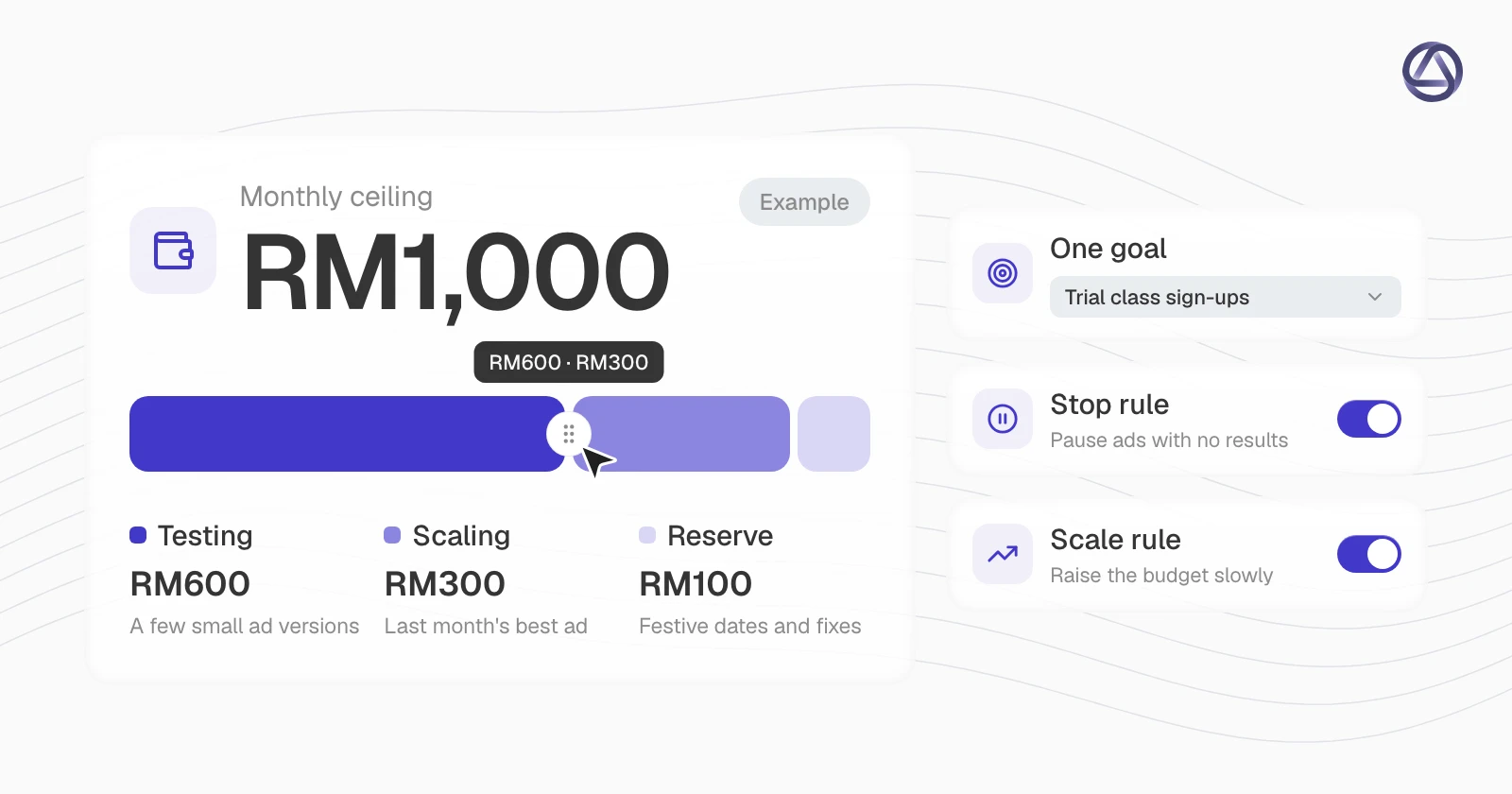
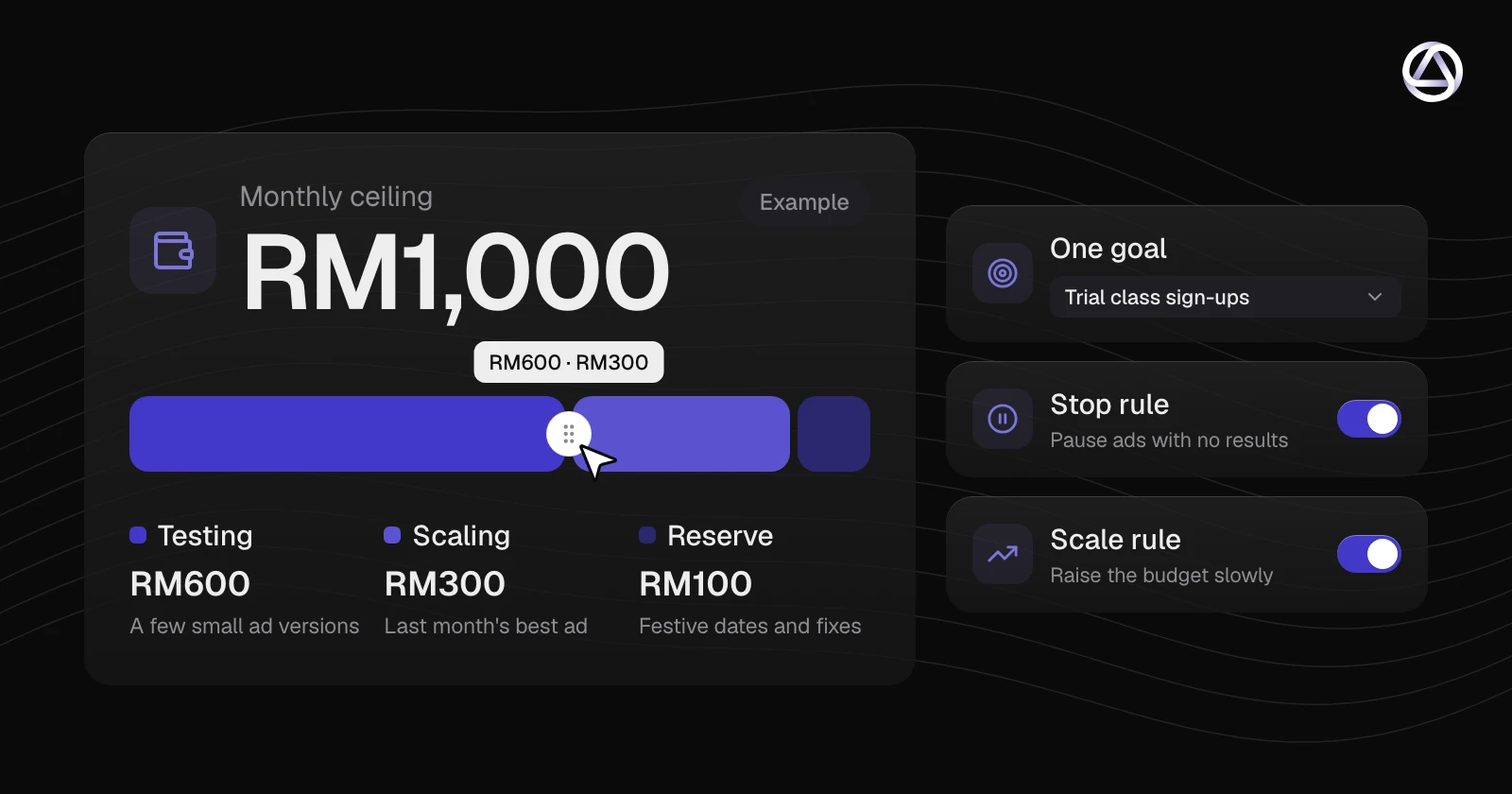
You have a few hundred ringgit or dirhams a month for ads, and every platform wants you to spend it on something different. Boost this post, try that format, add another audience. Without a plan, the money drifts and you can't tell what worked.
This post is a simple way to set the budget before you spend any of it. The figures are examples. Change them to fit your own business.
Pick one goal for the month
Choose one thing the ads must do. Get messages on WhatsApp. Get people to book a trial class. Get online orders. Get more people to follow the page.
Each goal needs a different ad and a different way of judging it. If you ask for orders, messages and followers at once, you will have three half-answers at the end of the month and no clear next step.
Say you run a nail salon in Al Raha Beach, Abu Dhabi. Your goal is appointment bookings. Say you run a tuition centre in Cheras. Your goal is trial class sign-ups. Both are one sentence, and both tell you what to measure: bookings, or sign-ups.
Set a ceiling you can afford to lose
Treat the ad budget as money that might not come back this month. Decide the highest amount you can spend without changing how you pay rent, suppliers or staff.
Write it down as a monthly ceiling, and do not raise it halfway through because one ad had a good day. A good day is not a trend. Raise the ceiling next month, after you have looked at the whole picture.
Here is an example, clearly labelled: a ceiling of RM1,000 a month. We are not saying what RM1,000 buys, because that depends on your product, your area, your offer and the platform. It is a round number to split up. A business in the UAE can use AED 1,000 with the same split.
Split the budget between testing and scaling
In the first months, most of your money should go to testing: finding out which offer, picture and message gets people to act. Scaling means putting more money behind something that has already worked.
An example split of the RM1,000:
| Bucket | Amount | Job |
|---|---|---|
| Testing | RM600 | Spread over a few small ad versions |
| Scaling | RM300 | The best version from last month, if there is one |
| Reserve | RM100 | Held back to react to a festive date or fix a mistake |
In your first month there is nothing to scale yet, so put the scaling money into the reserve or into longer tests. The split is a guide. What matters is that each ringgit has a job before you spend it.
Keep the setup simple
A small budget spread thin tells you nothing. Ten ads, each shown to a few people, give you ten guesses.
Start with two or three ads and one audience. For the salon, that could be people living within a short drive of it in Al Raha Beach. For the tuition centre, parents in and around Cheras.
Change one thing between ads. Same photo with two headlines, or same headline with two photos. If the ads differ in five ways, you won't know which difference mattered.
You can draft the versions yourself, or ask Marvis in a chat to draft a few for you. Marvis writes the ad drafts. You still choose which ones to run, where, and how much to spend.
Give each test enough time
The most common mistake with a small budget is judging too early. You check after a few hours, see no result, and switch everything off.
Set a minimum run before you look. A fair rule for a small account is to let each test run for several full days, including a weekend if your customers buy at weekends. Decide the number of days in advance and write it down, so a nervous moment on day two doesn't make the call for you.
Also decide what you will judge by. If your goal is trial sign-ups, look at cost per result: how much you spent for each sign-up. Likes and reach are fine to glance at, but they are not your goal.
Write your stop and scale rules in advance
Rules written before you spend are easier to follow than decisions made while you are worried or excited. Here are examples to adapt.
Stop rules
- If an ad has run for your minimum number of days and has produced no results at all, pause it.
- If an ad's cost per result is well above what you can afford to pay for a customer, pause it, even if people like it.
- If people are clearly confused, say the comments keep asking the same question about price, fix the ad copy before spending more.
Scale rules
- If an ad has met your minimum run and its cost per result is within what you can afford, keep it.
- Raise its budget in small steps, not in one jump, and watch whether the cost per result holds.
- If frequency climbs, meaning the same people keep seeing the ad, refresh the picture or the headline before adding money.
Your own numbers matter more than anyone else's. Work out what a customer is worth to you, subtract your costs, and that tells you what you can pay for one result.
Time your spending around the calendar
Demand moves through the year, and your reserve is there for it. Year-end sales, Chinese New Year, Hari Raya, Ramadan and Deepavali all change what people are ready to buy and how much attention they give to ads.
Plan the season before it starts. Do your testing in the quieter weeks before it, so you walk in with an ad you already trust. Then put the scaling money and the reserve behind that ad when people are buying.
The salon might test two ads in the weeks before a festive season, then back the better one when bookings pick up. The tuition centre might test a trial class offer before the school year turns, not in the week parents are already deciding.
Everyone else is advertising in the same weeks too, so your ads compete for attention. That is one more reason to test early rather than on the day.
Keep posting organically
Ads should not be your only channel. When you stop paying, paid reach stops with it. Regular organic posts keep your page alive for the people who click through to check you out before they buy.
They also give you free material to learn from. A post that gets real comments and shares is a good candidate for an ad later, so your best organic content becomes your next test.
A light schedule is enough: a few posts a week, a mix of products, behind the scenes, customer questions and festive greetings. In Marvis, you can plan a month of organic posts in the content calendar, edit each one, approve it, and Marvis publishes it on its date. You can write in any language. That leaves your attention free for the ad decisions, which only you can make.
A one-page plan to fill in
Before the month starts, write down:
- Your one goal.
- Your monthly ceiling.
- The split: testing, scaling and reserve.
- The two or three ads, and the one thing that differs between them.
- Your minimum run before you judge.
- Your stop rule and your scale rule.
- Your organic posting plan for the same month.
If you can't fill in one line, you are not ready to spend yet. Fill it in first, then start small. If you want help drafting the ad versions and planning the organic posts, you can try Marvis.